- The three classic types of rosewood furniture
These three types of wood were widely used as raw materials for palace furniture during the Ming and Qing dynasties. Today, they are synonymous with high-end rosewood because of their scarcity and high price.
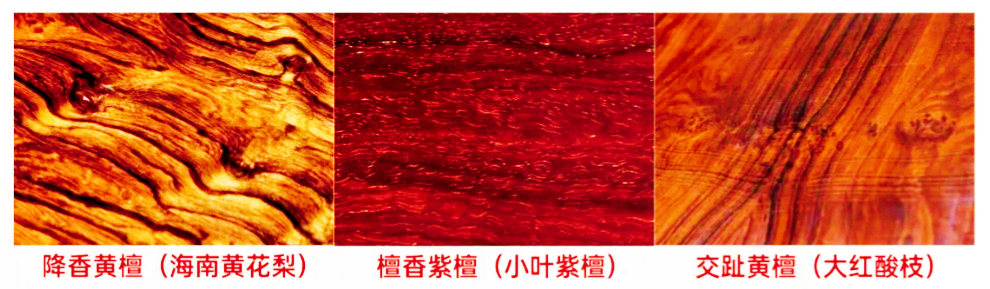
Dalbergia odorifera (Hainan rosewood): Wild Hainan rosewood is on the verge of extinction, and the market mainly consists of old wood or plantation wood, with prices comparable to gold.
Sandalwood (Pterocarpus santalinus): Used exclusively by the Qing Dynasty imperial family. Large pieces are now rare, and most are small items or handicrafts.
Dalbergia cochinchinensis (also known as rosewood): One of the "three major tribute woods" of the Ming and Qing dynasties, it still exists today, but the quantity of high-quality large pieces is decreasing year by year.
- 【The Five Tiger Generals of Redwood】
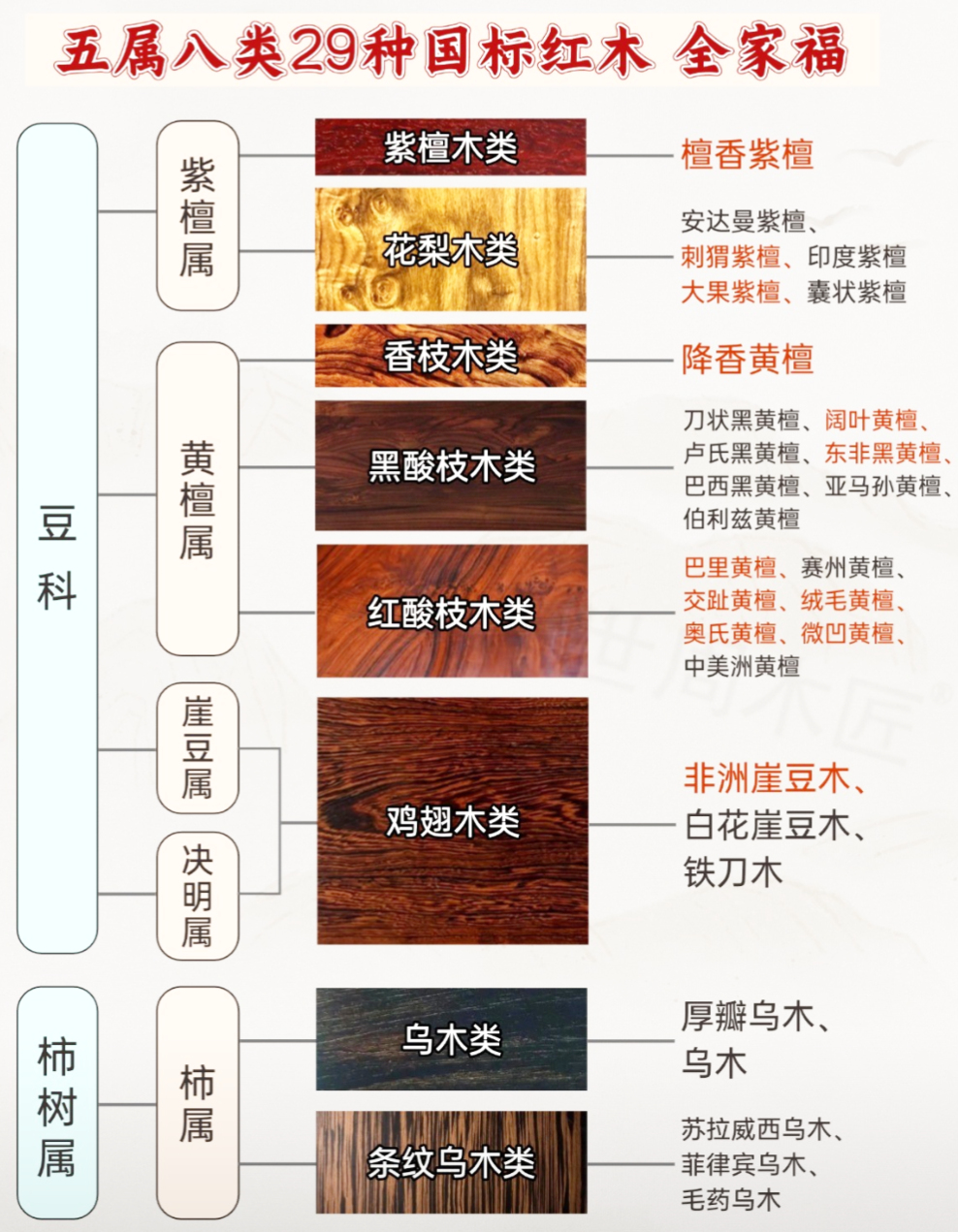
With the depletion of the traditional three main types of rosewood resources, the "Five Tigers" have filled the market gap. These five types of rosewood account for more than 90% of the current national standard rosewood sales, covering both mass-market and mid-to-high-end products.
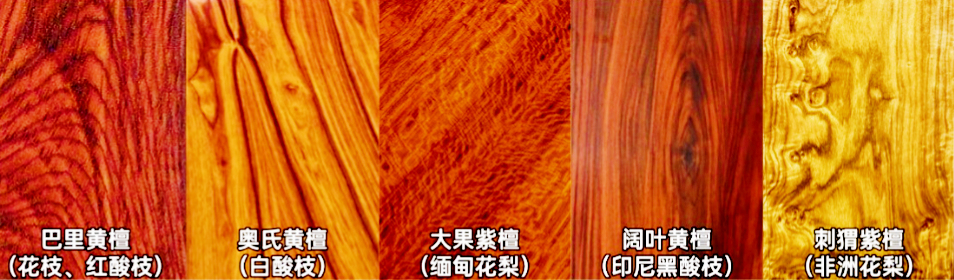
Bari rosewood (flower branch): A traditional and precious material used in the Ming and Qing dynasties. The wood has a small diameter and the finished products are mostly made by splicing. It is the most expensive among the five tiger generals.
Rosewood (Dalbergia oliveri): Introduced to China during the Qing Dynasty, it was often used as a substitute because its grain is similar to that of huanghuali (rosewood).
Burmese rosewood (Pterocarpus macrocarpus): a mainstay of mid-range rosewood, it was once a substitute for huanghuali (Chinese rosewood) during the Ming and Qing dynasties.
Dalbergia latifolia (Indonesian black rosewood): It has become popular in recent years due to its high cost performance, but some varieties do not meet the national standard for black rosewood.
African rosewood (Pterocarpus erinaceus): It is inexpensive and suitable for those with a limited budget who still want to buy rosewood.
- Old Rosewood
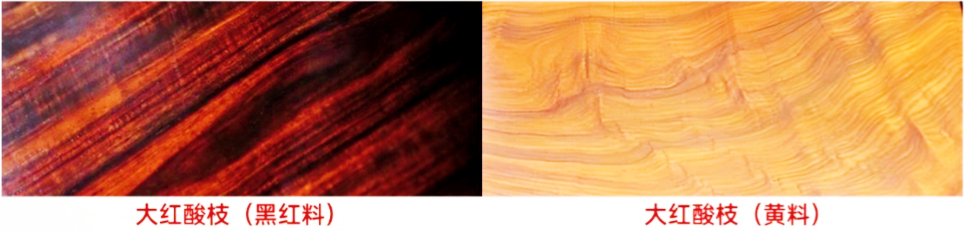
Dalbergia cochinchinensis, also known as Siamese rosewood, got its name from its use in the imperial court during the Ming and Qing dynasties. In the central and northern parts of the Yangtze River Delta, the Beijing-Tianjin-Hebei region, and the Yangtze River Delta, Siamese rosewood is called "redwood," while in the southern regions, represented by Guangdong, it is called "rosewood."
- 【New Rosewood】
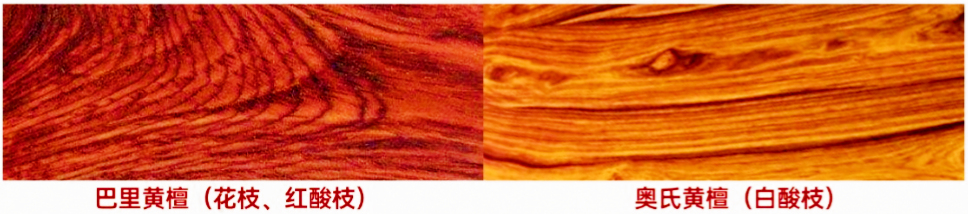
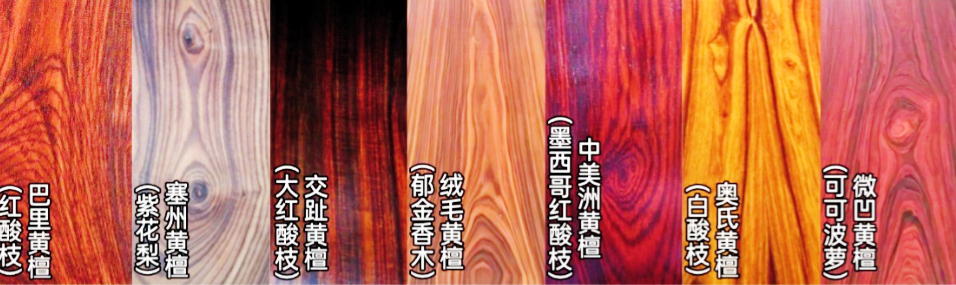
During the late Qing Dynasty and the Republic of China period, rosewood and white rosewood were introduced into China as substitutes for old rosewood. To distinguish them from old rosewood, Dalbergia bariensis (rosewood) and Dalbergia oliveri (white rosewood) were collectively referred to as "new rosewood".
- 【Red sandalwood】
There are only seven types of rosewood that can be called red sandalwood.
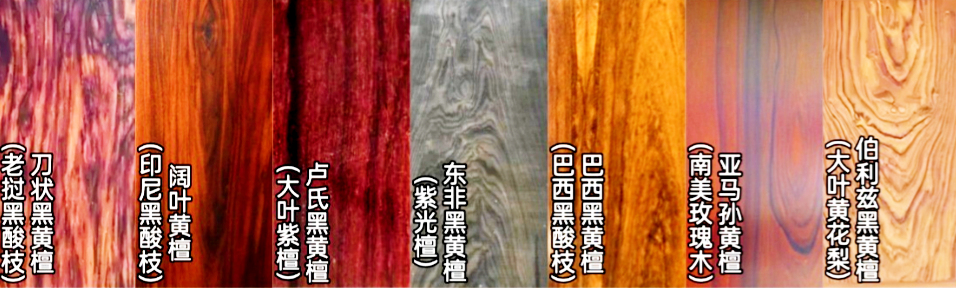
- Black rosewood
There are only seven types of black rosewood that can be called redwood.
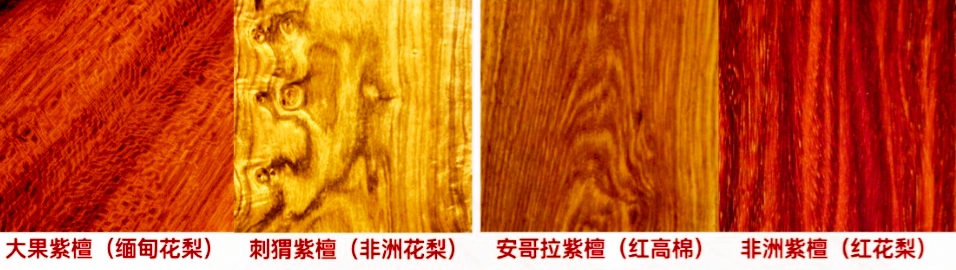
- [Kusakarin]
This is actually a nickname for a type of wood, not its scientific name. It is used to refer to woods with beautiful grain, yellowish-red color, stable properties, and relatively affordable prices, similar to a "budget alternative" to Hainan rosewood.
Among the national standard and non-national standard rosewoods, the following are some common types of rosewood.
Tips to avoid common pitfalls!
1. Ask the scientific name: Ask the seller what the scientific name of the wood is, for example, "Is this Pterocarpus macrocarpus?"
2. Check the testing: Ask the seller to provide a timber identification report from a formal institution.
3. Smell: Good rosewood has no foul or pungent odor, and some even have a faint fragrance.
4. Compare prices: If the price is ridiculously low, there is likely something fishy going on.


 Chinese
  English